Awork Vs Clickup Comparison: Ultimate Project Management Showdown
Choosing the right project management tool can make or break your productivity. If you’re torn between Awork and ClickUp, you’re not alone.
Both promise to streamline your workflow, but which one truly fits your needs? Whether you’re managing a small team or juggling multiple projects, understanding the strengths and weaknesses of each platform can save you time, money, and frustration. In this detailed comparison, you’ll discover how Awork and ClickUp stack up against each other in real-world use. Ready to find the perfect fit for your workflow? Let’s dive in—and if you want to explore ClickUp’s powerful all-in-one features right now, check it out here: ClickUp.
Introduction To Awork And Clickup
Choosing the right project management tool is vital for efficient teamwork. Awork and ClickUp are two popular options that help teams organize tasks and projects. This section introduces both tools and explains why comparing them matters.
Overview Of Awork And Its Purpose
Awork is designed to simplify task and project management. It focuses on clear workflows and easy collaboration.
- Helps teams plan and track tasks visually.
- Offers tools for time tracking and project deadlines.
- Supports communication within the platform to keep everyone updated.
Awork aims to reduce chaos in project handling and improve team focus.
Overview Of Clickup And Its Purpose
ClickUp combines many work tools into one platform. It serves as an all-in-one solution for managing projects, documents, chats, and more.
- Replaces multiple software tools with one application.
- Includes AI features to save time and improve work quality.
- Supports team collaboration with perfect context sharing.
ClickUp helps teams save money and work smarter by uniting all tasks and communication.
Why Comparing These Two Project Management Tools Matters
Both Awork and ClickUp aim to improve team productivity. Yet, they offer different features and workflows.
- Choosing the right fit: Teams must pick tools that match their work style and needs.
- Cost and value: Understanding pricing helps control budgets.
- Feature sets: Comparing features reveals strengths and limits of each tool.
Knowing these differences helps teams work better and meet project goals efficiently.

Credit: thebusinessdive.com
Key Features That Set Awork Apart
Awork stands out in project management with features designed for ease and efficiency. It offers tools that simplify daily tasks, foster teamwork, and keep projects on track. These features make Awork a strong choice for teams seeking a smooth workflow and clear project visibility.
Intuitive Task Management For Streamlined Workflow
Awork provides simple task creation and organization. Users can quickly add tasks, assign them, and set deadlines. The system supports:
- Task prioritization with clear labels
- Subtasks for breaking down complex work
- Drag-and-drop task ordering
This setup helps teams focus on what matters most. Tasks flow naturally from start to finish, reducing confusion.
Collaborative Time Tracking To Boost Productivity
Awork’s built-in time tracking lets team members log hours directly on tasks. This feature helps with:
- Monitoring time spent on activities
- Improving accountability
- Generating accurate reports for billing or analysis
Time tracking is simple and visible to all collaborators, encouraging better time use.
Simplified Project Planning And Visualization
Planning projects in Awork is clear and visual. Users benefit from:
- Calendar views for deadlines and milestones
- Progress bars showing task completion
- Project timelines that outline the full schedule
This visualization helps teams stay aligned and spot delays early.
How Awork’s User-friendly Interface Reduces Learning Curve
Awork’s interface is clean and easy to navigate. It uses clear icons and labels. New users can:
- Understand the layout without training
- Access main functions with few clicks
- Customize views to fit their needs
This reduces setup time and helps teams start working faster.
Distinctive Features Of Clickup And Their Benefits
ClickUp stands out with features designed to streamline work and boost productivity. Its tools adapt to different workflows and team needs. Users benefit from a flexible platform that combines tasks, communication, and data analysis in one place. This integration reduces the need for multiple apps, saving time and effort.
Each feature supports better organization and clearer project tracking. Teams can customize views, automate routine tasks, and analyze performance with ease. ClickUp’s all-in-one approach helps teams stay aligned and focused on goals.
Highly Customizable Task Views And Workflows
ClickUp offers a variety of task views to suit any project style:
- List View: Classic task list for clear, detailed tracking.
- Board View: Kanban-style boards for visual workflow management.
- Calendar View: Schedule and deadlines displayed on a calendar.
- Gantt Chart: Visualize project timelines and dependencies.
Users can create custom statuses and workflows tailored to their processes. This flexibility helps teams manage tasks exactly how they work best. It also supports different project types, from simple to complex.
Comprehensive Automation And Integration Capabilities
ClickUp includes strong automation tools that cut down repetitive work. Users can set rules to:
- Auto-assign tasks
- Change statuses
- Send notifications
It integrates smoothly with many popular apps like Slack, Google Drive, and Zoom. This connection keeps data synced and reduces manual updates. Automation and integration together save time and reduce errors.
Robust Reporting And Analytics For Data-driven Decisions
ClickUp’s reporting tools offer detailed insights into team performance and project progress. Features include:
- Custom dashboards with key metrics
- Time tracking reports
- Task completion rates
- Workload distribution
These reports help teams identify bottlenecks and adjust plans quickly. Data-driven decisions improve productivity and ensure projects stay on track.
Multi-functional Workspace Combining Tasks, Docs, And Chat
ClickUp brings tasks, documents, and team chat into one workspace. This reduces app switching and keeps communication context clear. Key benefits:
- Docs: Create and share rich text documents linked to tasks.
- Chat: Real-time messaging inside the platform for quick discussions.
- Tasks: Manage and track all work from one place.
The combined workspace boosts collaboration and keeps everyone aligned on project goals.

Credit: www.awork.com
Pricing And Affordability Breakdown
Understanding the pricing and affordability of Awork and ClickUp helps teams choose the right tool. Budget matters for small startups and large companies alike. Both platforms offer plans that suit different needs and budgets. This section dives into their pricing models and value, helping to find the best fit.
Awork Pricing Plans And Value For Money
Awork offers straightforward pricing with a focus on simplicity and clarity. Its plans typically include:
- Free Plan: Limited features, ideal for individual users or small teams.
- Paid Plan: Starts at a fixed monthly fee per user, unlocking project management, time tracking, and integrations.
The paid plan gives access to most core features without complicated tiers. This makes it easy to predict costs and scale. Awork’s pricing is competitive for teams focusing on project tracking and collaboration.
Clickup Pricing Structure And Cost Effectiveness
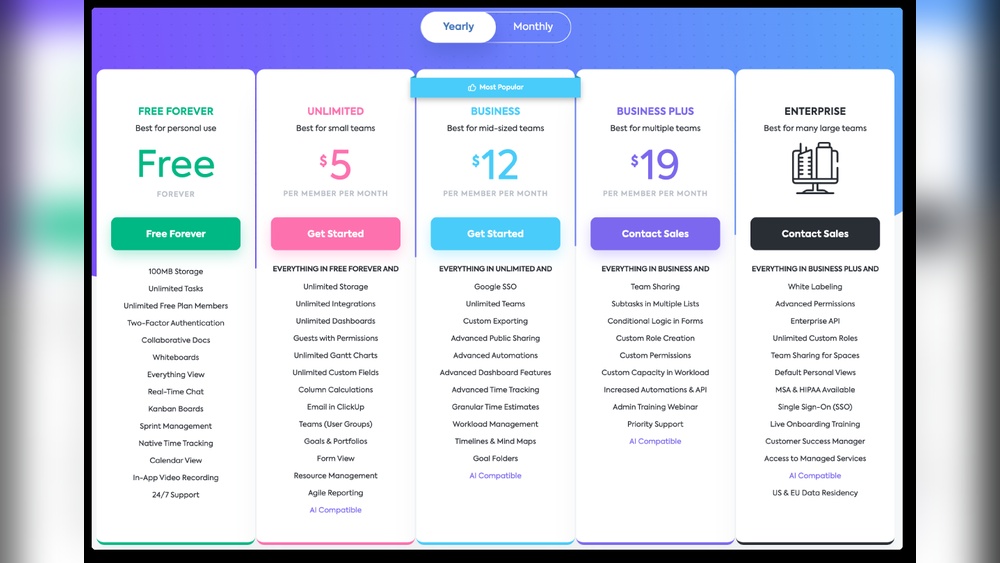
ClickUp uses a tiered pricing structure with multiple plans:
| Plan | Cost Per User | Key Features |
|---|---|---|
| Free | $0 | Unlimited tasks, members, and integrations |
| Unlimited | $5/month | Unlimited storage, dashboards, and integrations |
| Business | $12/month | Advanced automation, goals, and reporting |
| Enterprise | Custom pricing | Custom features, security, and support |
ClickUp’s plans cover users from freelancers to large teams. Its free plan offers more features than many competitors. Paid plans add powerful automation and customization options, improving productivity.
Comparing Free Tiers And Premium Options
- Free Plans: ClickUp’s free tier is more generous than Awork’s.
- Premium Plans: Awork charges a flat rate, while ClickUp provides multiple levels.
- Feature Access: ClickUp includes advanced tools in paid plans, suitable for growing teams.
- User Limits: Both tools allow scaling, but ClickUp is more flexible for large teams.
The choice depends on team size and required features. Small teams may prefer Awork’s simple pricing. Larger teams benefit from ClickUp’s tiered options and deeper functionality.
Which Tool Offers Better Roi For Different Team Sizes
- Solo and Small Teams (1-5 users): Awork’s straightforward pricing suits tight budgets. ClickUp’s free plan also fits small teams needing more features.
- Medium Teams (6-20 users): ClickUp’s Unlimited plan offers good value with advanced tools. Awork remains affordable but with fewer advanced options.
- Large Teams (20+ users): ClickUp’s Business and Enterprise plans scale well. Automation and reporting boost team efficiency, improving ROI.
Teams focused on cost predictability prefer Awork. Teams needing customization and automation find ClickUp more cost-effective in the long run.
Pros And Cons Based On Real-world Usage
Choosing between Awork and ClickUp shapes how your team manages projects daily. Both tools offer unique strengths designed for different work styles and needs. Understanding these differences helps you pick the best fit for your team’s success.
Summarizing Key Differences And Strengths
| Feature | Awork | ClickUp |
|---|---|---|
| Task Management | Simple, intuitive interface for task tracking | Highly customizable with AI-powered features |
| Project Complexity | Best for small to medium projects | Supports complex and large-scale projects |
| Collaboration | Basic team communication tools | Integrated chat, docs, and context-aware collaboration |
| Customization | Limited customization options | Extensive customization with dashboards and workflows |
| Pricing | Affordable for small teams | Cost-effective for teams needing all-in-one software |
Factors To Consider Based On Team Needs And Project Complexity
- Team Size: Smaller teams may prefer Awork’s straightforward design.
- Project Scale: Larger, complex projects benefit from ClickUp’s flexibility.
- Collaboration: Teams needing real-time communication thrive with ClickUp.
- Budget: Awork suits teams with tight budgets and simpler needs.
- Customization: ClickUp fits teams requiring tailored workflows and dashboards.
Final Recommendations And Next Steps For Evaluation
- List your team’s key project requirements and workflows.
- Try free versions or demos of both Awork and ClickUp.
- Evaluate how each tool handles your project complexity.
- Assess team feedback on ease of use and collaboration features.
- Decide based on which tool saves time and fits your budget.
Testing both tools with your team will reveal the best match. Focus on ease, flexibility, and communication to make your choice clear.

Credit: thebusinessdive.com
Frequently Asked Questions
Is There Anything Better Than Clickup?
Several tools may suit specific needs better than ClickUp. Monday. com excels in visual workflows, Asana offers simple task management, Notion provides flexible workspaces, Trello simplifies Kanban boards, Wrike handles complex projects, and Smartsheet favors spreadsheet planning. Choose based on your team’s priorities.
What Are The Cons Of Clickup?
ClickUp has a steep learning curve and complex interface that can overwhelm users. It may suffer slow performance with heavy use. The mobile app often faces bugs and inconsistent sync. Some users report slow search and AI features, along with poor customer support and missing niche integrations.
Does Netflix Use Clickup?
Netflix does not publicly confirm using ClickUp. They likely use custom or enterprise project management tools tailored to their needs.
Is Clickup Good For Adhd?
ClickUp helps ADHD users by organizing tasks with customizable views and reminders. Its all-in-one platform boosts focus and productivity.
Conclusion
Choosing between Awork and ClickUp depends on your team’s needs. Awork offers simple task management with a clean interface. ClickUp provides more features, combining AI tools and project tracking. It suits teams wanting an all-in-one workspace to save time and money. Both tools help organize work, but ClickUp’s broader options stand out for many users. To explore ClickUp’s capabilities, visit ClickUp here. Consider your workflow style and budget before deciding. The right software can boost your team’s productivity and ease daily tasks.